Introduction
Wearable technology has changed the way people monitor everyday activity, explore fitness trends, and stay connected with personal health information. While smartwatches and fitness bands remain popular, smart rings have emerged as a compact alternative for people who prefer lightweight devices without large screens. Among the brands attracting attention in this category, Colmi offers smart rings designed to combine practical tracking features, modern styling, and accessible pricing.
Colmi smart rings are worth exploring for people interested in monitoring activity, checking selected health-related measurements, and reviewing sleep patterns through a compatible smartphone application. Their compact design makes them different from traditional wearables, while their feature sets may appeal to beginners who want to explore wearable technology without purchasing a premium device.
Choosing the right smart ring requires more than comparing prices. Battery life, sensor capabilities, application compatibility, comfort, water resistance, and data accuracy can all influence the overall experience. Understanding these factors helps buyers decide whether a Colmi device meets their expectations.
This complete guide explores Colmi smart rings, including their design, tracking capabilities, everyday performance, potential limitations, and important considerations before purchasing one.
Understanding Colmi Smart Rings
Colmi is a consumer technology brand associated with affordable wearable devices, including smart rings. These products are designed to bring selected fitness and wellness tracking functions into a small accessory that can be worn throughout the day.
Unlike a smartwatch, a smart ring generally does not depend on a large display. Instead, it uses built-in sensors to collect selected measurements and communicates with a smartphone application to display the information. Depending on the specific model, supported functions may include heart rate monitoring, sleep tracking, activity tracking, and blood oxygen estimation.
The available features differ between models, so buyers should always review the specifications of the exact ring they intend to purchase. A function advertised for one Colmi model should not automatically be assumed to exist in every product from the brand.
The main attraction is convenience. A ring can be less visually distracting than a watch, fit naturally into everyday clothing choices, and provide a different approach to collecting personal activity information.
For people exploring a budget smart ring with heart rate tracking, Colmi may be a useful brand to investigate, particularly when affordability and basic wearable functions are more important than advanced sports analytics.
Design and Build Quality
A Compact Alternative to Smartwatches
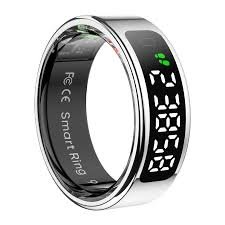
One of the most noticeable characteristics of a smart ring is its size. Colmi rings are designed to sit on a finger rather than occupy the wrist, making them suitable for users who prefer discreet accessories.
A compact wearable can be convenient at school, work, while travelling, or during everyday activities. It also eliminates the need to look at a screen repeatedly to access basic information, because the associated application typically provides the main interface.
However, a smart ring is not automatically more comfortable than a smartwatch for everyone. Finger shape, ring width, internal sensor placement, and personal preferences all affect the wearing experience.
Before choosing a model, consider whether its dimensions and weight are appropriate for extended wear. Product photographs alone may not provide a reliable impression of its actual size.
Materials and Finish
The materials used in a smart ring influence its appearance, durability, weight, and comfort. Depending on the model, Colmi products may use metal-based outer construction and a smooth interior designed to accommodate the sensors.
Finishes and available colours can vary, so checking the official specifications and product photographs is important. A ring should look suitable for everyday use while also fitting comfortably enough for the activities during which it will be worn.
Buyers should examine the quality of the edges, the finish around the sensor area, and the overall construction. Smooth surfaces and a well-fitted design can improve comfort, especially when wearing the device for several hours.
It is also sensible to review the manufacturer’s cleaning and maintenance recommendations. Sweat, dust, lotions, and other everyday substances may accumulate around a wearable, so appropriate care can help preserve its condition.
Choosing the Correct Ring Size
Sizing deserves particular attention because a smart ring needs appropriate contact with the finger to collect useful sensor readings.
A ring that is too loose may move around, while one that is too tight can become uncomfortable. Either situation can affect the overall wearing experience and potentially interfere with sensor contact.
Do not assume that smart ring sizing follows the same measurements as ordinary jewellery. Check the sizing information for the specific Colmi model and use a compatible sizing guide or sizing kit if available.
Consider how the ring feels when your hands are warm or cold, since finger dimensions can change slightly throughout the day. The ideal fit should feel secure without creating uncomfortable pressure.
Key Features of Colmi Smart Rings
Heart Rate Monitoring
Heart rate monitoring is one of the most interesting features for people researching affordable wearable technology. Depending on the model, a Colmi smart ring may use optical sensors to estimate heart rate by detecting changes in light associated with blood flow near the skin.
The application may display readings taken at selected intervals or during particular tracking sessions. These measurements can help users explore general activity patterns and understand how their recorded heart rate changes during everyday routines.
For example, a user might compare readings taken during quiet periods with measurements recorded after ordinary physical activity. Over time, this information may provide a broad picture of personal trends.
However, a smart ring should not be treated as a medical diagnostic instrument. Sensor accuracy can be influenced by movement, ring fit, skin contact, temperature, and the quality of the device’s software.
People who require reliable medical heart rate monitoring should consult an appropriate healthcare professional about suitable equipment. A consumer smart ring is best considered a wellness accessory rather than a replacement for clinical assessment.
Sleep Tracking
Sleep tracking is another feature that can make smart rings appealing. Depending on the model, the device may record periods of rest and estimate sleep duration or different sleep stages.
Because a ring occupies less space on the body than some wrist-worn devices, certain users may find it convenient to wear overnight. This can make it easier to collect information about sleep habits without introducing another large accessory into the bedtime routine.
A compatible application may present sleep information through charts, summaries, or daily reports. These displays can help users notice patterns, such as differences between nights with shorter sleep and nights with a more consistent schedule.
Nevertheless, consumer sleep tracking provides estimates rather than a complete medical assessment of sleep quality. The results should be interpreted as general guidance, not definitive evidence of a sleep disorder.
Healthy sleep habits remain important regardless of which wearable device a person uses.
Daily Activity Tracking
Many smart rings include features that estimate daily movement, steps, or activity levels. Colmi models with these capabilities can offer users a simple way to review general activity trends.
Activity summaries may help someone recognise whether their routine includes regular movement or involves extended periods of sitting. Some applications also present daily goals or historical records that make progress easier to review.
The accuracy of movement tracking varies according to sensor design, algorithms, and the activities being performed. Hand movements may sometimes be counted as steps, while certain activities may be underrepresented.
Consequently, activity statistics should be treated as estimates rather than exact measurements.
For general wellness tracking, consistency can be more useful than focusing on a single number. Reviewing patterns over several days or weeks may provide a more meaningful understanding of everyday movement.
Blood Oxygen Estimation
Some smart rings advertise blood oxygen monitoring, often described as SpO2 measurement. When supported by the specific model, this function uses optical sensing to estimate the proportion of oxygenated haemoglobin in the blood.
Such readings can be interesting for general wellness awareness, but they require careful interpretation. Consumer wearable measurements may be affected by sensor positioning, circulation, movement, and other factors.
A smart ring should not be used to diagnose or manage a medical condition. If someone experiences concerning symptoms or needs dependable oxygen measurements, they should seek professional medical guidance and use appropriate medical equipment.
Always verify whether the particular Colmi ring supports this function and how its manufacturer describes the measurement process.
Smartphone Application Integration
The smartphone application is central to the smart ring experience. Since the ring itself usually has limited display capabilities, the application presents much of the information collected by the device.
Depending on the model and software, users may be able to view heart rate records, activity summaries, sleep estimates, and other supported measurements. Some applications also provide historical charts that make it easier to compare information over time.
Before buying a Colmi product, check its compatibility with your phone’s operating system and confirm the name of the required application. Review the installation requirements and whether the software supports the functions you want to use.
Application quality can significantly affect the usefulness of an otherwise capable wearable. Clear charts, straightforward navigation, reliable synchronisation, and understandable settings can make everyday tracking more convenient.
It is also sensible to review the application’s privacy policy and permissions before connecting a device to your personal account.
Everyday Performance and User Experience
Wearing the Ring Throughout the Day
A smart ring is intended to fit into everyday routines with minimal disruption. Its compact form can make it suitable for commuting, studying, working at a desk, or participating in ordinary daily activities.
The practical experience depends on the ring’s dimensions, weight, surface finish, and fit. People who regularly wear jewellery may find the format familiar, while those who do not usually wear rings may need time to adjust.
A well-fitting device should remain comfortable during normal activities without repeatedly needing repositioning. If it becomes uncomfortable, causes skin irritation, or interferes with movement, remove it and reassess the fit.
Users should also follow the manufacturer’s guidance concerning exercise, contact with hard objects, and other activities that may damage the ring.
Sensor Performance and Data Consistency
Smart ring performance depends on the relationship between hardware, software, and how the device is worn.
Optical sensors need suitable skin contact to collect useful readings. A loose fit, frequent movement, or poor sensor positioning may reduce consistency. Firmware updates and application improvements may also influence how measurements are processed or presented.
Rather than judging the ring by a single reading, look for consistency across normal conditions. If a measurement appears unusual, repeat it according to the manufacturer’s instructions and avoid making important health decisions based on that reading alone.
Different wearables may produce different estimates because they use different sensors and algorithms. This is particularly relevant when comparing an affordable smart ring with a premium smartwatch or a medical monitoring device.
A lower purchase price may provide access to useful everyday tracking, but it does not guarantee the same measurement quality as more specialised equipment.
Bluetooth Connectivity and Synchronisation
Most connected smart rings use Bluetooth to communicate with a compatible smartphone. This allows collected information to be transferred to the application for review.
The quality of the experience depends on connection stability, application behaviour, and the device’s internal storage and synchronisation capabilities. Some products may collect data before synchronising, while others may require a more regular connection.
Check the product documentation to understand how pairing works, whether the application needs to remain active, and how the ring handles periods without a phone nearby.
If connection problems occur, basic troubleshooting may include checking Bluetooth settings, updating the application, ensuring the ring has sufficient battery power, and following the manufacturer’s pairing instructions.
It is important to confirm these details for the exact Colmi model rather than assuming every device behaves identically.
Battery Life and Charging
Battery performance is an important consideration because a smart ring is most useful when it can be worn consistently.
Colmi models may differ in battery capacity, estimated operating time, and charging arrangements. Actual battery life can depend on the frequency of heart rate measurements, enabled monitoring features, Bluetooth activity, software settings, and battery age.
Manufacturers’ advertised battery estimates should be understood as conditional figures rather than guaranteed results for every user.
A charging case, where supplied, can make it easier to recharge the ring without carrying a separate cable everywhere. However, charging accessories and their capabilities vary by product, so check what is included in the package.
Before purchasing, consider the following questions:
- How long does the manufacturer estimate the ring will operate on one charge?
- Does frequent heart rate monitoring affect the expected battery life?
- Is a charging case included, or must it be purchased separately?
- How long does a full recharge take?
- Can the application show the remaining battery level?
A convenient charging routine can reduce interruptions and make long-term use easier. It is also worth checking whether replacement or warranty support is available if the battery’s performance deteriorates.
Water Resistance and Durability
Water resistance can be valuable in a wearable intended for daily use. However, different products offer different levels of protection, and the term should not be interpreted as a guarantee that a ring can withstand every type of water exposure.
Check the specific Colmi model’s stated water-resistance rating and the activities approved by its manufacturer. Resistance to occasional splashes does not necessarily mean the device is suitable for swimming, showering, hot water, or prolonged immersion.
Water pressure, temperature, soaps, and cleaning chemicals may affect performance or damage components, depending on the product’s construction.
Durability also depends on how the ring is handled. Hard impacts, scratches, repeated friction, and exposure to unsuitable chemicals can affect its finish and operation.
For people who perform manual work, lift weights, or participate in activities involving hard equipment, removing a ring may be the safer and more practical choice. Rings can also become caught on objects, creating a potential finger injury risk.
Following the manufacturer’s care recommendations helps protect both the device and the wearer.
Colmi Smart Rings Compared With Smartwatches
Smart rings and smartwatches serve overlapping but different purposes. Choosing between them depends on the information, convenience, and interaction style a user prefers.
A smart ring is generally designed for discreet tracking and a screen-free wearing experience. A smartwatch usually offers a display, interactive notifications, and a broader range of applications, depending on the model.
Smartwatches may also provide more convenient controls during workouts, navigation, and communication. Smart rings can appeal to people who do not want another screen on their wrist or prefer a smaller accessory.
Consider the following comparison.
| Feature | Colmi Smart Ring | Smartwatch |
|---|---|---|
| Form factor | Compact ring worn on a finger | Wrist-worn device |
| Screen | Usually no full interactive display | Typically includes a display |
| Health tracking | Depends on the ring model | Depends on the watch model |
| Notifications | Generally limited compared with watches | Often supports interactive notifications |
| Battery life | Varies by model and usage | Varies by model and usage |
| Comfort | Depends on finger fit and activities | Depends on watch size and strap |
| Price | Some models target budget buyers | Available across budget and premium ranges |
Neither category is automatically better for everyone. People who prioritise a display and interactive features may prefer a smartwatch, while users interested in discreet tracking may prefer a ring.
Is Colmi a Good Budget Smart Ring With Heart Rate Tracking?
For people researching a budget smart ring with heart rate tracking, Colmi can be a relevant option to compare with other products in the same category.
Affordability can make wearable technology more accessible, especially for users who want to explore basic activity monitoring before investing in a more expensive device.
However, a low price should not be the only deciding factor. Buyers should consider sensor performance, battery life, application quality, comfort, sizing options, warranty terms, and the availability of customer support.
It is also useful to distinguish between a device that records heart rate occasionally and one that offers continuous monitoring. These functions are not identical, and the availability of either feature must be confirmed for the specific model.
Look carefully at the product listing for details about included accessories, supported operating systems, charging arrangements, and any limitations described by the manufacturer.
Independent reviews can provide additional information about everyday use, but individual experiences may vary. When possible, compare multiple sources and look for consistent observations rather than relying on a single positive or negative review.
A budget device can offer practical value when its verified capabilities match the buyer’s needs.
Privacy and Personal Data
Wearable technology can collect information that users may consider personal, including activity records, sleep estimates, and heart rate measurements. Understanding how this information is stored and processed is an important part of choosing a smart ring.
Before connecting a Colmi device to a smartphone application, review the software’s privacy policy. Look for information about account requirements, cloud storage, data sharing, deletion options, and permissions.
Grant only the permissions required for the functions you intend to use. If an application requests access to information unrelated to the ring’s purpose, review why that access is needed before proceeding.
It is also sensible to protect your smartphone with an appropriate screen lock and keep the application updated.
Data privacy deserves attention alongside battery life and sensor performance because a wearable’s usefulness depends partly on how comfortably and confidently you can use its software.
How to Choose the Right Colmi Smart Ring
Identify Your Main Purpose
Start by deciding what you want from the device. Someone interested primarily in heart rate trends may have different requirements from a user who prioritises sleep summaries or general activity tracking.
Make a short list of essential functions and check that the exact model supports them. This avoids paying for features you will not use or buying a ring that lacks an important capability.
Check the Full Specifications
Product names and designs can be similar, but specifications may differ. Verify the sensor functions, compatible operating systems, battery estimates, water-resistance rating, ring dimensions, and charging accessories.
If a listing makes broad claims without providing clear specifications, seek additional information before purchasing.
Compare the Total Cost
The initial price is only one part of the purchase decision. Shipping, taxes, optional accessories, and potential return costs can affect the total amount paid.
Review the seller’s return policy and warranty terms, particularly because sizing and comfort are difficult to judge from photographs.
Evaluate the Application
A smart ring’s application should be straightforward to use and compatible with your smartphone. Look for clear information about pairing, synchronisation, measurement history, and software support.
A technically capable ring may be less useful if the application is unreliable or difficult to navigate.
Read Reviews Carefully
Look for reviews that describe real-world comfort, battery performance, connection stability, and sensor consistency. Give more weight to detailed observations that identify the model tested and explain how it was used.
Remember that a reviewer’s experience may not represent every user’s results, particularly when ring sizing, phone compatibility, and monitoring settings differ.
Common Limitations to Consider
Although smart rings offer convenience, they are not suitable for every purpose.
First, their lack of a full display means users generally need a smartphone application to review detailed information. This may be inconvenient for someone who prefers immediate feedback directly on a wearable.
Second, sensor measurements are estimates and may not match readings from specialised medical equipment. Users should not rely on consumer wearable data for diagnosis or urgent medical decisions.
Third, comfort depends on fit. A ring that feels comfortable during ordinary activities may become inconvenient during certain sports, manual tasks, or activities involving heavy equipment.
Fourth, software support matters. Compatibility changes, application updates, and differences between phone operating systems can influence the experience over time.
Finally, features and specifications vary between models. It is important to confirm every significant claim against the product documentation rather than relying on the Colmi name alone.
Understanding these limitations makes it easier to set realistic expectations and choose a product that suits everyday needs.
Tips for Getting Better Results From a Smart Ring
To make the most of a Colmi smart ring, begin by following the setup instructions carefully. Install the compatible application, charge the device, pair it with your phone, and review the available settings.
Wear the ring according to the manufacturer’s guidance, ensuring that the sensors have appropriate contact with your skin. Avoid forcing a ring onto a finger if it feels too tight.
Keep the device clean using the recommended method, and avoid exposing it to substances or conditions that are not covered by its specifications.
Check the application periodically for synchronisation issues and software updates. Reviewing measurements over longer periods can provide a more useful picture of general patterns than focusing on individual readings.
Most importantly, treat the information as a tool for general awareness. A wearable can help you explore your routines, but it cannot replace professional advice, a balanced lifestyle, or appropriate medical evaluation when needed.
The Future of Affordable Smart Rings
The wearable technology market continues to develop as manufacturers explore smaller sensors, more efficient batteries, improved applications, and additional tracking capabilities.
Affordable devices may help more people experience connected wellness technology without purchasing expensive equipment. At the same time, buyers will continue to benefit from transparent specifications, dependable software, responsible data practices, and realistic claims about measurement accuracy.
Brands such as Colmi operate in a category where value depends on the relationship between price and practical performance. As consumer expectations evolve, product design and software quality will remain important factors in determining whether a device provides a satisfying experience.
For buyers, the best approach is to compare available models carefully and focus on verified functions instead of assuming that a newer or more expensive device will always be the best choice.
Conclusion
Colmi smart rings offer an interesting entry point into compact wearable technology for people who prefer a discreet alternative to traditional fitness bands and smartwatches. Depending on the specific model, available functions may include heart rate monitoring, sleep tracking, activity records, and smartphone application integration.
Their appeal lies in combining a small form factor with selected everyday tracking features. Nevertheless, comfort, sensor consistency, battery life, software compatibility, durability, and privacy all deserve attention before making a purchase.
Anyone considering a budget smart ring with heart rate tracking should verify the exact model’s specifications and compare its capabilities with personal requirements. A low price can be attractive, but genuine value comes from finding a device that is comfortable, practical, and supported by useful software.
Ultimately, a Colmi smart ring may be worth considering for general wellness awareness and everyday convenience, provided its limitations are understood. Careful research and realistic expectations can help buyers choose wearable technology that fits their routines and offers meaningful value over time.